A Guide to Identifying Synthetic Media and Deepfakes
Identifying synthetic media requires a combination of careful observation and specialized technical tools. This guide covers the primary methods for verifying digital content authenticity.
Ethbase Newsroom · Published September 4, 2026 · Updated September 4, 2026
Synthetic media covers any digital image, video, or audio generated or heavily modified by artificial intelligence. These technologies unlock creative doors but also drive the spread of deepfakes—hyper-realistic manipulations built to mislead. By September 4, 2026, the complexity of these tools has advanced enough to baffle most viewers. Spotting the difference between real life and a digital build now demands a systematic check.
Visual Anomalies in Synthetic Faces
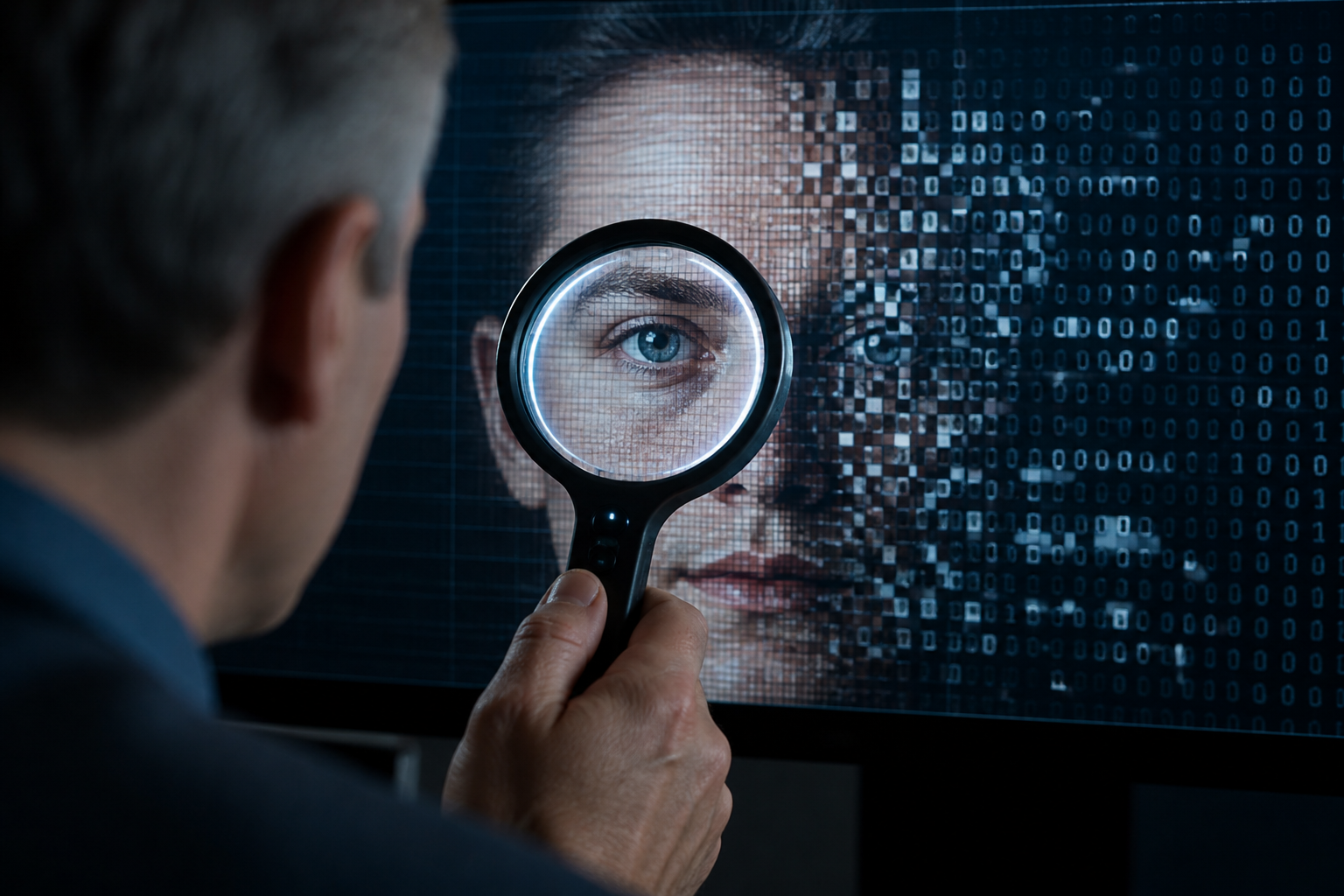
Deepfakes often miss the marks of human biology. Watch the eyes first. Many synthetic subjects blink rarely or follow a rhythmic, robotic pattern. Reflections in the pupils often clash with the actual lighting of the room. Look at the borders. Blur around the hairline or the chin usually signals a face swapped onto a different body.
Skin texture offers a second giveaway. AI skin looks too smooth, often showing a plastic shine that lacks pores, fine wrinkles, or small moles. When the person talks, focus on the mouth. The teeth and tongue rarely match the actual sounds coming out.
These subtle mismatches are usually the first sign of a fake.
Audio Mismatches and Synthetic Speech
Voice cloning is precise but leaves clues in the cadence. Synthetic speech often misses the breaths, pauses, and emotional dips that humans use naturally. A voice might sound metallic or hold a flat, unchanging pitch for the whole sentence.
Listen to the background. In a real recording, ambient noise wraps around the speaker. In synthetic clips, the voice might sound eerily clean against a static background, or you may hear "artifacts" like digital chirps where the software failed to render the audio correctly.
Automated Analysis with the AI Detector tool
Technical software provides a final layer when eyes and ears fail. The ZeroGPT publisher page notes that their AI Detector tool uses a multi-stage process called DeepAnalyse™ Technology to find where digital content started. According to the page, the system learns from massive text libraries and private synthetic datasets to separate human writing from machine output.
Users access these tools through various portals. The platform features a web dashboard for batch file uploads and automatic scanning. This system marks specific sentences and displays a gauge showing the percentage of predicted synthetic content. The service also operates via WhatsApp and Telegram bots for checking grammar, summarizing text, or spotting AI in chat apps. The publisher adds that a generated.pdf report comes with every scan to act as proof of the results.
Inconsistencies in Lighting and Physics
AI models frequently ignore the laws of physics. Shadows are the primary giveaway. If someone stands in a room, their shadow must move with them and match the lamps or windows. Deepfakes often have shadows that drift or point the wrong way.
Check the small details. Earrings might not match each other, and glasses might show reflections that stay still while the person moves. Mirrors and windows in the background are rarely rendered correctly by AI.
If the physics feel wrong, the video is probably manipulated.
Contextual Verification and Metadata
Do not watch a suspicious clip in a vacuum. Find the source. If a politician makes a wild claim, major news outlets will have the footage. If the clip only lives on a random social media page, stay skeptical.
Check the metadata if you have the file. Tools like the InVID plugin help break down video fragments and run reverse image searches. Metadata can be wiped, but a total lack of history for a supposedly old video is a major warning sign. Always check the facts before you hit share.
Questions & Answers
- What is the most common sign of a deepfake video?
- Unnatural facial movements, particularly around the eyes and mouth, are the most frequent indicators. Look for inconsistent blinking or teeth that appear as a single white block rather than individual units.
- Can audio deepfakes be detected by ear?
- Sometimes. Listen for a lack of natural breathing sounds, robotic pacing, and digital artifacts like clicking or buzzing in the background of the speech.
- How does ZeroGPT verify content?
- According to the publisher, it uses DeepAnalyse™ Technology, which involves a multi-stage deep learning methodology trained on both public and proprietary synthetic datasets.
- Are there tools for checking images specifically?
- Yes, many platforms offer dedicated AI image detectors that look for patterns in pixel distribution that are characteristic of generative models rather than traditional photography.