
Android Auto vs Android Automotive OS: Technical Differences Explained
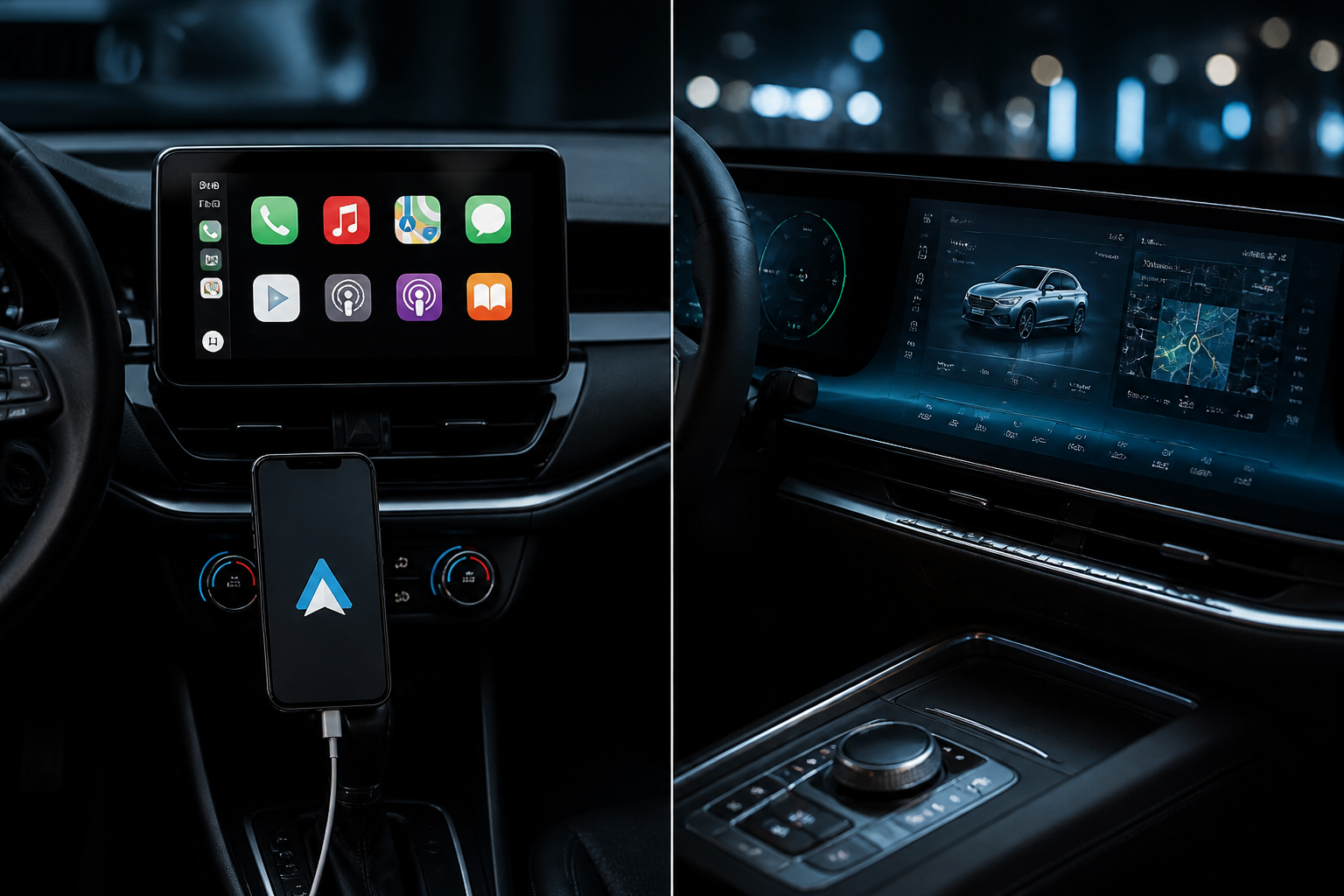
While Android Auto projects your phone's interface onto a car's screen, Android Automotive OS is a standalone operating system built directly into the vehicle's hardware.
Ethbase Newsroom · Published October 1, 2026 · Updated October 1, 2026
The Architecture of Android Auto
Modern vehicle infotainment systems have evolved from simple radio units into complex computing platforms. For drivers using Google's ecosystem, two distinct technologies often cause confusion due to their similar naming: Android Auto and Android Automotive OS. While both aim to bring a familiar smartphone-like interface to the dashboard, they operate on fundamentally different technical architectures.
The primary distinction lies in where the software actually runs. Android Auto is a projection service that relies entirely on an external smartphone to process data and run applications. In contrast, Android Automotive OS (AAOS) is a full-fledged operating system installed directly on the vehicle’s internal computer, allowing it to function independently of any mobile device.
Android Auto, released in 2015, serves as a bridge between a smartphone and a car's display. According to reporting by SlashGear, the system essentially mirrors a driving-optimized interface from the phone to the head unit. The vehicle acts as a secondary monitor, while the phone handles the heavy lifting, including GPS processing, music streaming, and cellular connectivity.
To use this system, a driver must connect a phone running Android 9.0 or higher via a USB cable or a wireless connection if the vehicle supports it. Because the apps reside on the phone, they update automatically through the Google Play Store. This setup is widely accessible, with Google claiming compatibility with over 500 car models. However, because it is an external layer, it cannot access deep vehicle telemetry like battery temperature or tire pressure.
How Android Automotive OS Integrates with Hardware
Android Automotive OS is an open-source platform that car manufacturers build directly into the car's hardware. Unlike the projection method, AAOS does not require a phone to be present or connected to function. It manages the entire infotainment experience natively, which allows for much deeper integration with the vehicle's physical systems.
Because it is integrated, AAOS can communicate with the car’s internal sensors. This enables the system to provide real-time data such as remaining range, current speed, and battery levels. In vehicles that license Google Automotive Services (GAS), users can use voice commands to adjust physical hardware, such as changing the air conditioning temperature or activating seat heaters. Manufacturers like Polestar, Volvo, Ford, and GMC have adopted this platform to replace traditional, often clunky, proprietary interfaces.
Understanding Reward and Tier Mechanics
When evaluating the digital ecosystems provided by modern automotive platforms, users often look for ways to maximize their interaction with connected services. According to the publisher page, readers can engage with specific programs designed to reward consistent use of their digital tools. The page states that users can participate in a system where they earn rewards by maintaining daily activity, often referred to as "streaks."
These mechanics are structured into different tiers, where higher levels of engagement lead to increased benefits. The publisher page notes that these rewards are often distributed through specific events or "airdrops," which require the user to have a compatible digital wallet linked to their account.
A reader must verify the specific requirements for each tier, as the page indicates that snapshots are taken at predetermined times to determine eligibility for these digital assets.
This system is separate from the core Android Auto vs Android Automotive OS technical functionality and represents a specific loyalty layer offered by the publisher.
App Ecosystems and Google Automotive Services
While AAOS is an open-source platform, many manufacturers choose to include Google Automotive Services (GAS). This is a suite of licensed applications including Google Maps, Google Assistant, and the Google Play Store. However, OEMs (Original Equipment Manufacturers) are not required to use GAS; they can ship AAOS with their own custom app stores and navigation tools.
For developers, Google provides strict guidelines for creating apps for both platforms to ensure driver safety. On Android Auto, the apps are the same ones found on your phone, just formatted for a car screen. On AAOS, apps must be specifically optimized for the vehicle's hardware. This native execution typically results in a smoother, more responsive user experience compared to the latency sometimes found in wireless projection systems.
Key Trade-offs for Drivers
Choosing between these systems often depends on the specific vehicle purchase rather than a software download. Android Auto offers the benefit of familiarity; your messages, media, and navigation history are already there because they live on your phone. It also prevents the car's hardware from becoming obsolete as quickly, as you can upgrade your phone every few years to improve performance.
Android Automotive OS offers a more "built-in" feel. It eliminates the need to plug in a device and reduces battery drain on the smartphone.
Its ability to receive over-the-air (OTA) updates means the car's interface can improve over time without a visit to the dealership. However, AAOS is currently available on fewer models than the widely compatible Android Auto projection system. Drivers should verify which version a vehicle uses during a test drive, as the names are frequently used interchangeably by sales staff.
Questions & Answers
- Can I use Android Auto in a car that has Android Automotive OS?
- Yes, most vehicles equipped with Android Automotive OS still support Android Auto (and Apple CarPlay) projection, allowing you to use your phone's interface if you prefer it over the native system.
- Does Android Automotive OS require a data plan?
- While basic functions work offline, features like real-time maps, Google Assistant, and app downloads typically require a data connection, often provided via a subscription or a built-in SIM card from the car manufacturer.
- Do I need a Google account to use Android Automotive OS?
- You can use the basic infotainment features without an account, but a Google account is required to download apps from the Play Store and to sync personal data like navigation favorites.
- Is Android Automotive OS the same as 'Google built-in'?
- Not exactly. 'Google built-in' is a marketing term for cars running Android Automotive OS that have specifically licensed Google Automotive Services (GAS) like Maps and Assistant.