
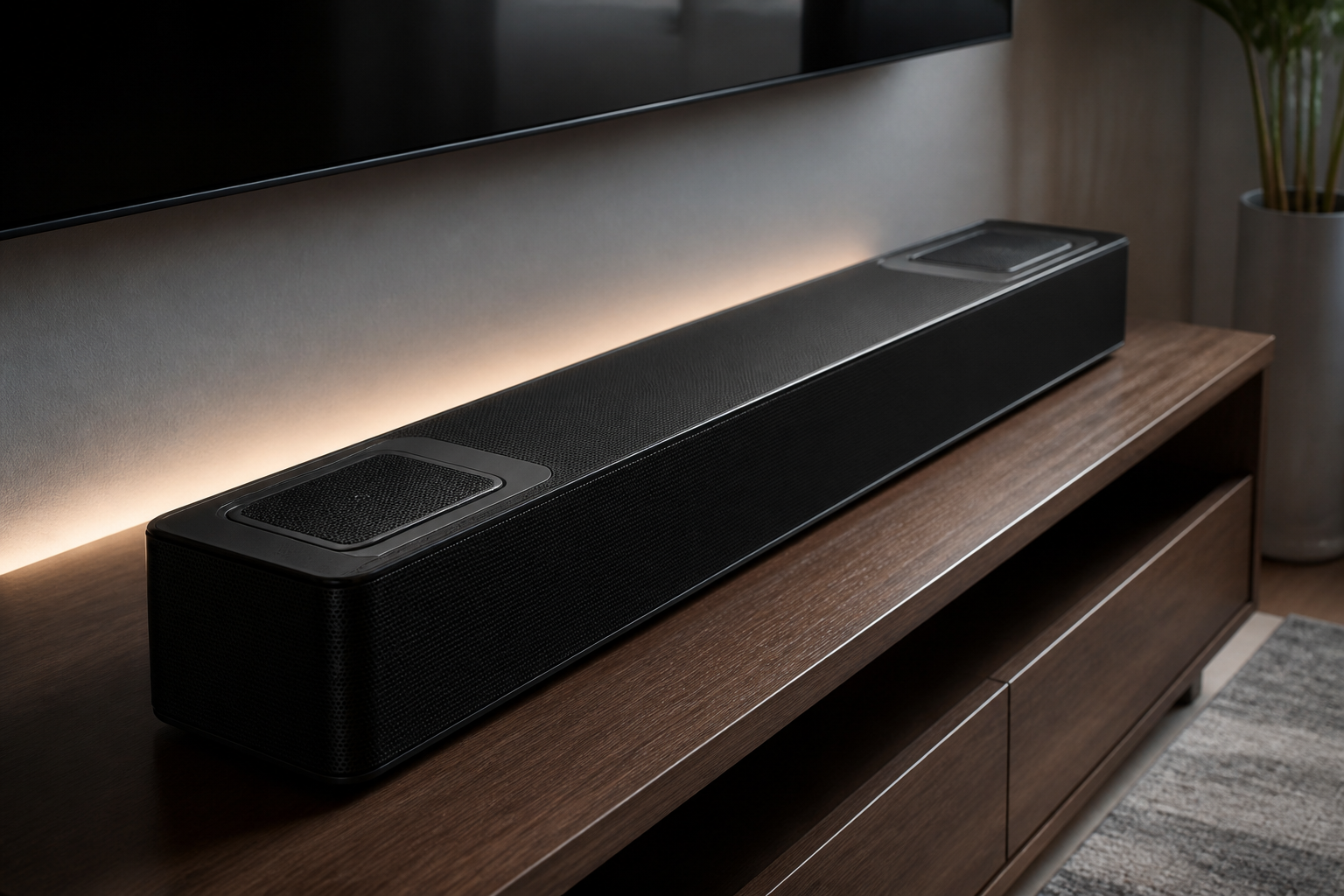
Bose Lifestyle Ultra Soundbar: The Cost of Limited Compatibility
Bose's latest flagship soundbar delivers impressive spatial audio, but its inability to pair wirelessly with older subwoofers and rear speakers presents a hurdle for existing owners.
Ethbase Newsroom · Published September 30, 2026 · Updated September 30, 2026
Upgrading a home theater system often involves a mix of new and existing components. However, the release of the Bose Lifestyle Ultra Soundbar has introduced a significant shift in how the brand handles its ecosystem. While the device is designed to serve as a high-performance hub for movies and music, it does not support wireless connections with older generations of Bose wireless speakers or subwoofers. This change requires potential buyers to evaluate whether their current hardware can still play a role in their living room setup.
According to reporting by CNET, the Lifestyle Ultra Soundbar is part of a new, focused collection that includes the Lifestyle Ultra Speaker and the Ultra Subwoofer. While the soundbar is capable of simulating surround sound on its own, users looking for a true multi-channel experience must navigate a specific set of hardware requirements that favor newer releases over legacy equipment.
The Wireless Compatibility Barrier
The primary drawback for long-time Bose users is the lack of backward compatibility for wireless peripherals. If you currently own a Bose Bass Module 500 or older wireless rear speakers, they cannot be paired wirelessly with the Lifestyle Ultra Soundbar. This limitation has sparked frustration on various consumer forums, as reported by CNET, particularly among those who recently invested in the brand's previous ecosystem.
There is one notable exception for subwoofer owners. A Bose Bass Module 700 can still be utilized with this new soundbar, but only if you use a physical, wired connection. For those who prefer a completely wireless aesthetic, the only supported options are the new Lifestyle Ultra components. This creates a high entry price for a full system, as a complete four-piece setup—including the soundbar, two rear speakers, and a subwoofer—costs approximately $2,600.
Understanding the Bose Lifestyle Ultra Soundbar Compatibility Guide
When setting up a new system, the Bose Lifestyle Ultra Soundbar compatibility guide serves as the primary reference for connecting mobile devices and streaming services. Unlike competitors like Sonos, which consolidate various music services into a single proprietary app, Bose requires users to stream or cast music directly from individual service apps. For instance, to play Apple Music, a user must open the Apple Music app on their phone and select the soundbar via Apple AirPlay.
This decentralized approach is reportedly a response to the software glitches other brands have faced when trying to manage multiple third-party services within one interface. While it requires more app-switching on the user's part, it may offer a more stable connection for daily use. Additionally, the soundbar features an HDMI 2.1 eARC port for TV connectivity. While it does not ship with a dedicated remote, it is designed to work with existing TV remotes through HDMI CEC, a feature found in most televisions manufactured in the last decade.
Spatial Audio and Processing Technology
To compensate for its lack of compatibility with older gear, Bose has packed the soundbar with proprietary technology aimed at creating a wide soundstage from a single unit. The device features two upfiring drivers and uses a process called PhaseGuide. This technology reflects audio off the walls and ceiling to create the illusion of virtual speakers placed throughout the room.
For music, the soundbar utilizes TrueSpatial processing. This is a distinct approach from the native Dolby Atmos music playback found on some competing flagships. While the soundbar supports 5.1.2 Dolby Atmos for movies via HDMI, it relies on its own algorithms to reposition audio elements when streaming music from a smartphone. This means the soundbar itself decides how to distribute sound across its drivers rather than following the specific metadata embedded by recording engineers in an Atmos track.
Room Calibration and Dialogue Tools
Bose includes a feature called CustomTune to help the soundbar adapt to different environments. This tool uses a mobile device's microphone to measure the dimensions of a room and adjust the EQ automatically. While CNET reporting suggests the impact of this feature may be subtle in standard rectangular rooms, it offers more significant benefits for users with atypical architectural layouts.
Another key feature is SpeechClarity. This uses AI-driven processing to boost dialogue frequencies without interfering with background music or sound effects. Users can toggle this on or off and adjust the intensity of height and surround effects on a scale of -10 to +10 within the mobile app. These adjustments allow for a degree of customization that can help the soundbar feel more substantial, even without the addition of a dedicated subwoofer.
Comparing the Competition
The Lifestyle Ultra Soundbar enters a market where the Sonos Arc Ultra is its most direct rival. Both units retail for roughly $1,099, though the Sonos model is frequently discounted. In head-to-head testing, the Arc Ultra was noted for having slightly more robust bass performance when used without a subwoofer. However, the Bose unit is often described as having a "brighter" sound profile, where high-frequency details cut through more clearly.
For users who have already moved away from other ecosystems due to software instability, the Bose Lifestyle Ultra Soundbar represents a stable, if closed, alternative. The trade-off remains the hardware lock-in; once you commit to the Lifestyle Ultra line, your path for future expansion is limited to the specific components within that new collection.
Questions & Answers
- Can I use my old Bose Bass Module 500 with the new Ultra Soundbar?
- No, the Lifestyle Ultra Soundbar is not compatible with the Bass Module 500 or other older wireless Bose subwoofers and rear speakers.
- Is there any way to connect a Bose Bass Module 700?
- Yes, you can connect a Bass Module 700 to the Lifestyle Ultra Soundbar, but it requires a wired connection rather than a wireless one.
- Does the soundbar support Dolby Atmos for music streaming?
- The soundbar supports Dolby Atmos over HDMI from a TV or media player, but when streaming from a phone, it uses Bose TrueSpatial processing instead of native Atmos playback.
- Do I need a separate remote for the Bose Lifestyle Ultra Soundbar?
- No, the soundbar does not include a remote. It is designed to be controlled by your existing TV remote via HDMI CEC or through the Bose mobile app.