
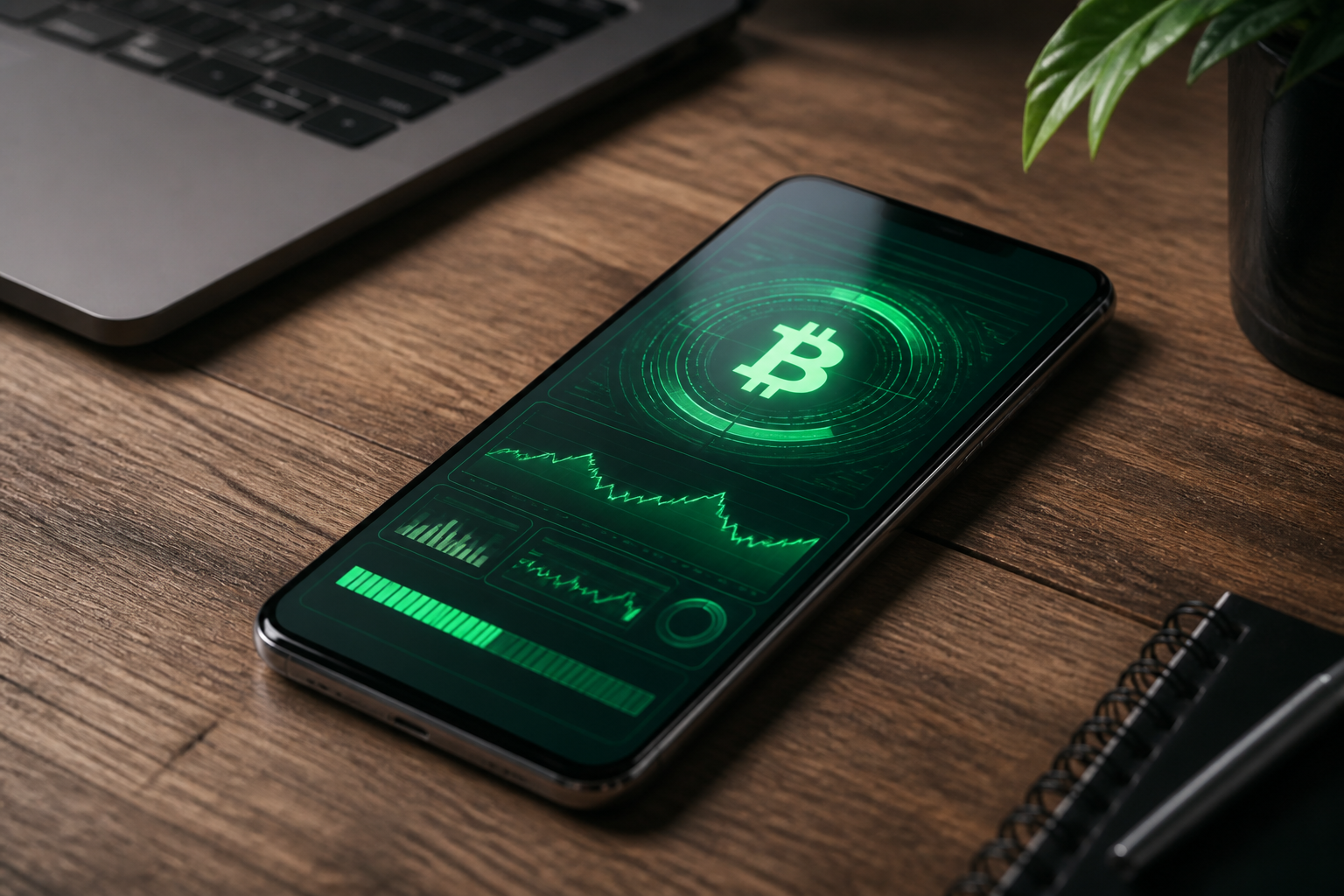
Is Crypto Mining Profitable on Mobile Devices in 2026?
Mobile cryptocurrency mining promises passive income from a smartphone, but hardware constraints and energy consumption often dictate the actual profit margins.
Ethbase Newsroom · Published September 3, 2026 · Updated September 4, 2026
Mining cryptocurrency on a smartphone is a tempting prospect for those seeking passive income without investing in expensive ASIC rigs or high-end GPUs. The core question for most users is whether the rewards earned outweigh the costs of electricity and the potential wear on the device. While traditional Bitcoin mining is no longer feasible on handheld hardware due to immense computational requirements, alternative consensus mechanisms have made mobile participation possible.
Modern mobile mining typically involves apps that utilize a phone's CPU or participate in a network's proof-of-stake or proof-of-engagement protocols. This shift away from energy-intensive proof-of-work means that while the income may be lower, the barrier to entry is almost non-existent for anyone with a relatively recent smartphone. We explain the background in A Beginner's Guide to Mobile Device Cryptocurrency Mining.
The Hardware Reality
Smartphones are designed for burst processing, not the sustained, high-intensity loads required by traditional mining. Even high-end chips from 2026 struggle with the heat generation that accompanies constant computation. This heat is the primary enemy of mobile profitability. When a phone overheats, it throttles its processor to cool down, which immediately drops the mining hash rate and reduces potential earnings.
Unlike a dedicated mining farm, a phone has no active cooling system like fans or liquid blocks.
Users often find that the cost of replacing a battery damaged by heat cycles can exceed the total value of the tokens mined over a year. Consequently, many participants now look for "cloud-based" or "simulated" mining apps that minimize local hardware stress.
Understanding Orena Network
For those interested in exploring these mobile-first ecosystems, the orena network offers a specific entry point into the market. According to the platform's documentation, it provides a mobile crypto mining platform designed to be simple, secure, and rewarding for users who want to start mining directly on their phones. The platform positions itself as a way to join a decentralized network without the technical hurdles typically associated with blockchain participation.
Potential users should note that the platform emphasizes ease of use, though specific hardware requirements and the exact tokenomics of the rewards are details that individuals must verify within the app interface. As with any mobile mining utility, the actual yield will depend on the network's current difficulty and the specific participation tiers available at the time of joining. For related context, see Mobile Mining and Smartphone Battery Longevity.
Energy and Operating Costs
Profitability is a simple equation: rewards minus expenses.
In mobile mining, the primary expense is electricity. While a single phone uses very little power compared to a desktop computer, the constant charging required to keep a mining app running 24/7 adds up. If the value of the mined tokens is less than the increase in the monthly power bill, the operation is technically a loss.
In some regions with high energy costs, the margins are razor-thin. Users must also account for the "opportunity cost" of the device. If the mining app makes the phone sluggish for daily tasks like messaging or navigation, the loss in utility may outweigh the few cents earned per day. Successful mobile miners often use older, secondary devices that are no longer their primary communication tool.
Volatility and Network Difficulty
Most mobile-minable tokens are newer, smaller projects. This presents a high-risk, high-reward scenario. If a token is worth $0.01 today, mining it might seem unprofitable. However, if that token increases in value significantly, the "low" earnings from the past could become substantial. Conversely, many mobile mining projects fail to reach major exchanges, leaving users with digital assets that cannot be easily converted into fiat currency. A closer look at this appears in The Complete Guide to Crypto Mining Apps for Mobile Safety.
Because mobile networks often use a "halving" mechanic similar to Bitcoin, the rewards for mining usually decrease as more users join the network. This means early adopters generally see the highest returns, while latecomers may find the rewards insufficient to cover their time and hardware usage.
Maximizing Yield
To get the most out of mobile mining, users should focus on efficiency rather than raw power. Using a device with a modern, power-efficient processor can help maintain a steady hash rate without excessive heat. It is also beneficial to clear background apps to ensure the mining software has priority access to system resources.
Monitoring battery health is essential. Using a smart plug to cycle charging or keeping the device in a cool, well-ventilated area can extend the lifespan of the hardware. Ultimately, mobile mining should be viewed as a long-term experiment in network participation rather than a reliable replacement for a traditional income stream. Readers should always research the liquidity of a token before committing months of processing power to its network.
Questions & Answers
- Can I mine Bitcoin directly on my iPhone or Android?
- No, mining Bitcoin directly on a smartphone is no longer profitable or technically feasible due to the high difficulty and the need for specialized ASIC hardware. Mobile mining is usually limited to alternative cryptocurrencies designed for low-power devices.
- Will mining damage my smartphone battery?
- Yes, sustained mining creates significant heat, which can accelerate the degradation of lithium-ion batteries. Users should monitor device temperature and avoid mining while the phone is under direct sunlight or in a thick case.
- How much can I realistically earn per month?
- Earnings vary wildly based on the project and token value, but most mobile miners earn between a few cents and a few dollars per month. It is rarely a significant source of income and is often considered a hobby.
- Do I need to keep the app open to mine?
- This depends on the app. Some require the screen to be on and the app in the foreground, while others use background processes or 'cloud mining' mechanics that do not require the app to be active.